Best American-Made Chocolate & Candy: Bean-to-Bar Chocolate, Toffee, Caramel and Hard Candy
Chocolate, toffee, caramel, hard candy and licorice made in American factories, from imported cacao where it has to be.
Quick Answer
For chocolate, Askinosie roasts and grinds imported cacao at its factory in Springfield, Missouri, and Mast makes organic bars in Mount Kisco, New York. For candy, Brown and Haley makes Almond ROCA in its one factory in Tacoma, Washington, Goetze's makes Cow Tales on Monument Street in Baltimore, and Hammond's hand-pulls candy canes and ribbon candy in Denver. Jelly Belly and Tootsie Roll make most of their candy in the US but also run plants abroad.
Last updated: October 2026
Made in USA Food & Beverages: by the numbers
- 878 verified American-made food & beverages products from 164 U.S. brands in the catalog, each checked against its factory location and its own statements.
- Top manufacturing states for these brands: California (9 brands), Oregon (9 brands), Vermont (9 brands).
- U.S. manufacturing employed 12.6 million Americans as of May 2026 (U.S. Bureau of Labor Statistics), and 70% of consumers say buying American-made is at least somewhat important to them (DuraPlas survey, Feb 2025).
Catalog figures recompute at every site build. More data and sources on our American manufacturing statistics page.
Quick Comparison
| Product | Brand | Link |
|---|---|---|
| Askinosie Dark Chocolate and Toasted Coconut Bar 3oz | Askinosie Chocolate | Shop Now |
| Askinosie 72% Tanzania Dark Chocolate Bar 3oz | Askinosie Chocolate | Shop Now |
| Ghirardelli Premium Assorted Chocolate Squares Variety Pack 23.6oz | Ghirardelli | Shop Now |
| Ghirardelli Premium Chocolate Assortment Gift Box | Ghirardelli | Shop Now |
| Mast Chocolate Bars | Organic, Kosher | Classic 2.5oz Dark | Mast Brothers Chocolate | Shop Now |
| Chukar Cherries Milk Chocolate Cherry Bings | Chukar Cherries | Shop Now |
| Chukar Cherries Dried Bing Cherries | Chukar Cherries | Shop Now |
| Vermont Nut Free Chocolates Hot Cocoa Mix 16 oz | Vermont Nut Free Chocolates | Shop Now |
| Vermont Nut Free Chocolates Milk Chocolate Drops 7.8 oz | Vermont Nut Free Chocolates | Shop Now |
| Rocky Mountain Chocolate Factory Assorted Chocolate Gift Box 14.5 oz | Rocky Mountain Chocolate Factory | Shop Now |
Bean-to-bar chocolate made here from imported cacao
Cacao does not grow in the continental US, so American chocolate means imported beans roasted, ground and made into bars here. The makers worth knowing say where both happen.
Askinosie is a small bean-to-bar factory at 514 E. Commercial St. in Springfield, Missouri, founded by Shawn Askinosie after he left a law practice. Roasting, grinding and bar-making all happen there, and the company presses its own cocoa butter and makes cocoa powder from the press cake. It buys beans directly from farmers in Davao in the Philippines, Mababu in Tanzania, and Ecuador, and shares profits with them. Its 72% Tanzania bar uses Mababu beans and its 77% Davao bar uses Philippine beans.
Mast started in Brooklyn as Mast Brothers and now makes its organic bars in a 10,000-square-foot former shoe store in Mount Kisco, New York, which also holds its kitchen, bakery and roastery. Its FAQ says it sources certified organic cacao only from Kokoa Kamili in Tanzania.
Ghirardelli, founded in San Francisco in 1852 and owned by Lindt & Sprungli since 1998, is the big name here, and its origin is less clearly stated. Ghirardelli's own website does not say where its products are made. Lindt lists the Ghirardelli Chocolate Company at 1111 139th Avenue in San Leandro, California, and several of its listings say Made in USA. We found no Ghirardelli product labeled as made elsewhere.


Boxed chocolates, chocolate cherries and nut-free chocolate
Rocky Mountain Chocolate Factory opened as a single shop in Durango, Colorado in 1981 and now has hundreds of stores. It says its chocolates, clusters, caramels, creams, truffles and molded chocolates are "all manufactured in our factory in beautiful Durango, Colorado," which covers the gift boxes, mint boxes and truffle assortments sold online. Fudge, caramel apples and dipped fruit are different: those are made fresh in each store. The company does not say where its cocoa comes from.
Vermont Nut Free Chocolates was started in 1998 by Mark and Gail Elvidge after their son developed a severe peanut allergy. Since 2018 it has made truffles, assortments, mini bars and hot cocoa at its factory on Brentwood Drive in Colchester, Vermont, which is free of peanuts, tree nuts, coconut, sesame and egg. It is the pick here for anyone buying for a nut allergy. It does not say where its cocoa, milk or sugar come from.
Chukar Cherries, family owned since 1988, dries Northwest cherries and coats them in milk and dark chocolate at its factory and flagship store on Wine Country Road in Prosser, Washington. The fruit is regional and the chocolate's origin is not stated, so a Chukar chocolate cherry is a Washington cherry coated in Prosser. It sells them in bags, gift boxes such as the Northwest Keepsake, and tins.


Toffee and caramel from Tacoma, Baltimore and Bozeman
Brown and Haley is the clearest case on this list. Harry L. Brown and J. C. Haley formed their partnership in 1912 and in 1919 turned a Tacoma shoe factory into their candy plant. The company's FAQ says every ROCA buttercrunch and MOUNTAIN Bar is "made exclusively in our one and only factory, located in Tacoma, WA." The MOUNTAIN Bar came first, in 1915, and Almond ROCA, butter toffee coated in chocolate and diced almonds, followed in 1923. The company says it uses California almonds and local butter.
Goetze's started as the Baltimore Chewing Gum Company in 1895 and turned to caramel in 1917, when chicle ran short during the First World War. Caramel Creams followed in 1918 and Cow Tales, the same caramel in a stick, in 1984. Goetze's has made caramel on Monument Street in Baltimore since 1928 and says "We're made in the USA. Always have been, always will." It buys from American suppliers "whenever possible," and its FAQ says some products are re-packaged at another facility it does not name.
Bequet Confections cooks and wraps its caramels in small batches in Bozeman, Montana, where Robin Bequet started the company in 2001. Its packaging carries a Made in Montana badge. Bequet joined the Life is Sweet group of candy brands in 2019, and it does not say where its sugar, cream or chocolate come from.


Hard candy pulled and poured by hand
Three old hard-candy makers still cook in their home towns, and two of them still do much of the work by hand.
Hammond's Candies was opened by Carl T. Hammond, Sr. in Denver in 1920 and works from a 35,000-square-foot plant north of downtown, with tours and a factory store. Each batch is cooked, colored, flavored and hand-pulled, and candy canes are crooked by hand, so sizes vary. Hammond's says its ingredients all originate in the US, chiefly from Denver and Colorado. The ribbon candy and canes name Denver outright. Its chocolate bars are handmade by Hammond's but carry no separate origin line.
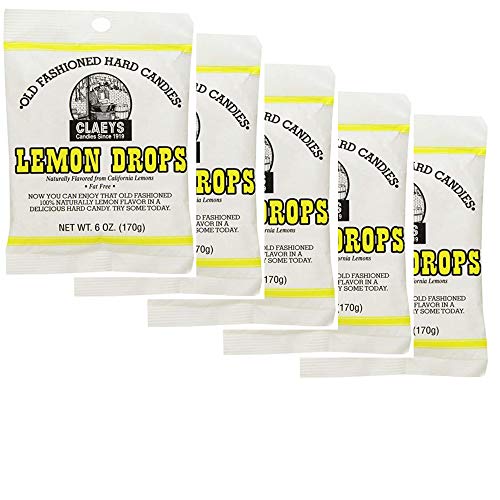
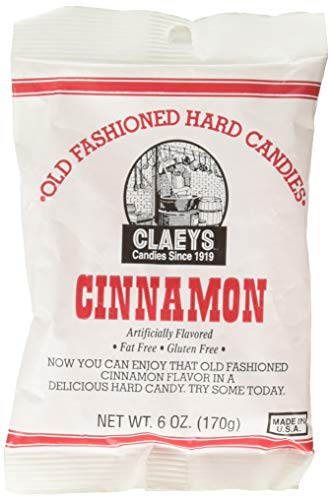
Claeys Candy began in 1919 in a South Bend, Indiana garage and has built four plants since. Gregg Claeys, the founder's grandson, runs it from 5229 Nimtz Parkway in South Bend. It makes old-fashioned hard candy in lemon, cinnamon, wild cherry, watermelon, licorice and root beer, plus fudge, peanut brittle and Chocolate Charlie. Its hard candy listings say Made in the USA.
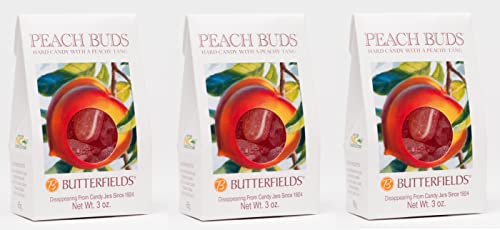
Butterfields makes Peach Buds, a peach hard candy with a thread of coconut in the middle, from a recipe the Cain family created near Winston-Salem in 1924. Each batch is cooked in a copper kettle and folded by hand. The company moved to Nashville, North Carolina in 1994, closed in 2009 and was restarted by Dena Manning in 2012. Its pages read "Crafted in our Nashville, North Carolina facility."


Licorice, jelly beans and Tootsie Rolls from the big candy makers
The large candy companies make most of their best-known products in the US, but some also run plants abroad, so the bag is worth reading.
Red Vines are made in Union City, California by American Licorice Company, which Martin Kretchmer started in Chicago in 1914. Part of the business moved to California in 1925, and the plant moved to Union City in the 1960s. The red twist began there in the 1950s as Raspberry Vines. American Licorice is now based in La Porte, Indiana, and says it is still family owned. Neither the Red Vines site nor the parent company's site mentions overseas production.
Jelly Belly traces its roots to Gustav Goelitz, who made candy in Belleville, Illinois from 1869. Its gourmet jelly bean came out in 1976, and its Fairfield, California factory is known for its tours. Ferrara has owned the company since 2023. Jelly Belly has plants in Fairfield, in North Chicago, Illinois, and in Rayong, Thailand, so check the bag for the country of manufacture.
Tootsie Roll Industries makes Tootsie Rolls and Tootsie Pops at its 3.2-million-square-foot complex on Chicago's South Side, which turns out more than 65 million Tootsie Rolls a day. The company also runs plants in Illinois, New York, Tennessee and Mexico for certain product lines, and it does not say which of its candies come from Mexico. We list Midgees, Tootsie Pops, Tootsie Roll Chews and DOTS.


How to choose chocolate and candy
Decide what American-made means to you first. For chocolate it can only mean where the beans were roasted and turned into chocolate, because the cacao is imported. A bean-to-bar maker such as Askinosie or Mast controls every step from roasting onward and names its farms. A confectioner such as Rocky Mountain, Chukar or Brown and Haley makes candy in its own American factory but usually buys chocolate already made, and most do not say where it comes from. Both are made in the USA; they answer different questions.
Read the percentage on a dark bar. It is the share of the bar that comes from cacao, beans and added cocoa butter together. A 72% bar is noticeably less sweet than a 60% one, and above 80% most people find it bitter on its own. Milk chocolate adds milk solids and more sugar.
For candy gifts, match the candy to the season and the shipping. Hard candy, licorice and jelly beans ship well in heat. Chocolate, caramel and toffee can soften or bloom in a hot truck, so order them for cool weather or ask for cold packs. For someone with a nut allergy, a dedicated nut-free factory such as Vermont Nut Free Chocolates is safer than a product that only leaves nuts out of its recipe.
Finally, check the bag on products from the big companies. Jelly Belly and Tootsie Roll both run plants outside the US, and the package states the country where it was made.
Browse All Food & Beverages Products
See all 878 verified American-made food & beverages products in our catalog.
Frequently Asked Questions
Is Ghirardelli chocolate made in the USA?
Ghirardelli's own website does not say where its chocolate is made. Its parent company, Lindt & Sprungli, lists the Ghirardelli Chocolate Company at 1111 139th Avenue in San Leandro, California, and several Ghirardelli listings say Made in USA. We found no Ghirardelli product labeled as made in another country. The cacao is imported, as it is for every American chocolate maker, because cacao does not grow in the continental US.
Where is Almond ROCA made?
Almond ROCA is made in Tacoma, Washington. Brown and Haley's FAQ says all ROCA buttercrunch pieces and MOUNTAIN Bars are made exclusively in its one and only factory there, a former shoe factory the company has used since 1919. Its mailing address and outlet store are in neighboring Fife. ROCA was introduced in 1923, and the company says it uses California almonds and local butter.
Where are Jelly Belly jelly beans made?
Jelly Belly has plants in Fairfield, California, where it runs its well-known factory tours, in North Chicago, Illinois, and in Rayong, Thailand. The company, owned by Ferrara since 2023, traces its roots to Gustav Goelitz's candy business in Belleville, Illinois in 1869 and introduced its gourmet jelly bean in 1976. Because it makes jelly beans in more than one country, check the bag for the country of manufacture.
Is any chocolate grown in the United States?
Not in the continental US, where the climate is too cold for cacao trees. American chocolate makers import their beans and roast, grind and make the chocolate here. Askinosie in Springfield, Missouri buys beans from farmers in the Philippines, Tanzania and Ecuador, and Mast in Mount Kisco, New York buys organic cacao only from Kokoa Kamili in Tanzania. Both name their farm partners, which most chocolate brands do not.