Best American-Made Pocket Knives: EDC & Folding Knives from Buck, Benchmade, Case & More
Everyday carry folders and tactical knives made in American steel — from iconic 130-year-old Case patterns to cutting-edge Benchmade ergonomics.
Quick Answer
The best American-made pocket knives include Benchmade from Oregon City, Oregon (AXIS lock, LifeSharp service), Buck Knives from Post Falls, Idaho (since 1902), and Case Knives from Bradford, Pennsylvania (since 1889).
Last updated: April 2026
Made in USA Tools & Hardware: by the numbers
- 605 verified American-made tools & hardware products from 98 U.S. brands in our catalog, each checked against factory locations and manufacturer statements.
- Top manufacturing states for these brands: Pennsylvania (11 brands), Illinois (7 brands), Ohio (6 brands).
- U.S. manufacturing employed 12.6 million Americans as of May 2026 (U.S. Bureau of Labor Statistics), and 70% of consumers say buying American-made matters to them (DuraPlas survey, Feb 2025).
Catalog figures recompute at every site build. More data and sources on our American manufacturing statistics page.
Quick Comparison
Why American-Made Pocket Knives Matter
A quality pocket knife serves as a tool and a companion for decades. Unlike imported budget knives that degrade in a season, American-made folders are engineered around the premise that the person carrying the knife will depend on it, use it regularly, and expect it to perform the same way five years from now as it does today. American knife manufacturers have maintained domestic production despite — and often because of — price pressures that would drive offshore production. The decision to keep manufacturing in the USA has direct practical implications: blade steel is sourced to consistent specifications, heat treatment is controlled in-house, and quality inspection happens before knives ship.
American knife manufacturers also stand behind their products. If a lock fails, a blade chips, or a spring weakens, the manufacturer is still in business and has parts available. This is not a theoretical benefit — it's the difference between a knife that can be maintained and fixed for life and a knife that becomes disposable. A person who buys a Buck Knives 110 folder today can find replacement parts for that knife in 2050, and the warranty will still be honored. Cheap imported knives come with no such guarantees; once the importer stops stocking parts, the knife is functional but unrepairable.
The blade steel and locking mechanisms found in American pocket knives reflect competitive evolution within the domestic market. Each manufacturer has invested in understanding how lock types fail, how blade steels perform under actual cutting loads, and how ergonomic geometry affects real-world use. That competitive pressure creates better products than simply designing to a price point and outsourcing to the cheapest contractor. American knife makers compete on performance and reliability because their business depends on repeat customers and brand reputation, not on volume and cost reduction.
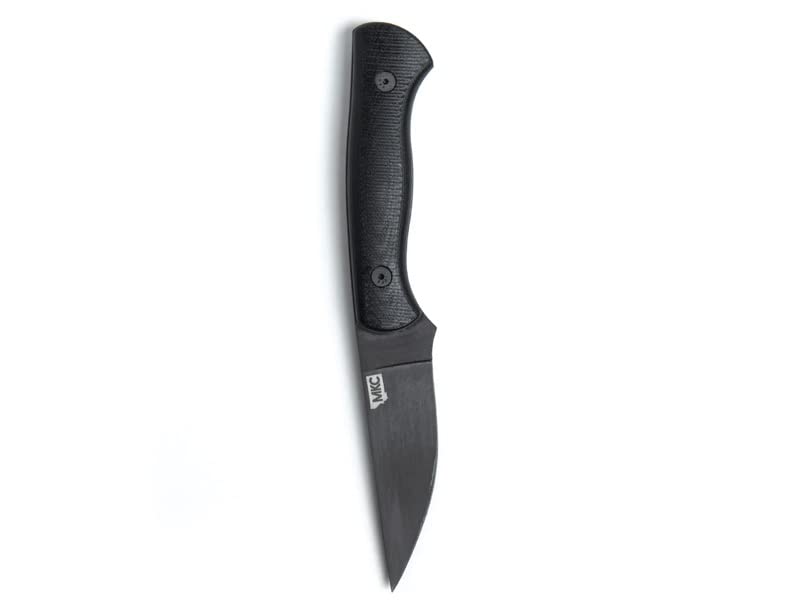
Budget & Value: Kershaw and Mid-Tier American Knives
Kershaw manufactures folders at its Tualatin, Oregon facility, serving the price-conscious buyer who wants American-made quality without premium pricing. The Kershaw SpeedSafe assisted-opening mechanism is a proprietary spring system that helps the blade deploy efficiently with a thumb flick or by pushing the flipper tang. The SpeedSafe knives typically cost $40-80 and are competitive with imports twice the price in terms of blade steel and lock reliability.
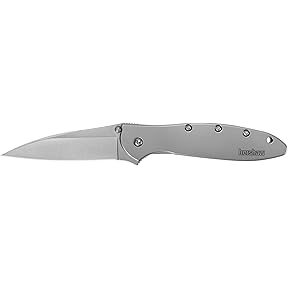
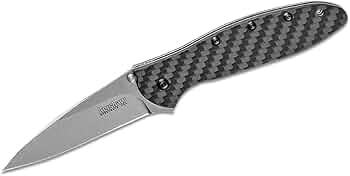
The Kershaw Leek is one of the most popular budget American folders — the blade steel is 14C28N (a Sandvik stainless formula), the lock is Kershaw's proprietary Speed-Clip, and the handle is aluminum with a deep carry clip for inside-the-pocket wear. For someone choosing their first quality EDC knife, the Leek delivers on cutting performance and reliability at a price that doesn't require justification to a spouse or a wallet. The blade is moderately sharp out of the box and holds an edge for practical daily use without requiring frequent honing.
Kershaw's Clash uses a 3.5-inch blade with the same 14C28N steel and adds a fire-starter wheel that protrudes from the handle for emergency use — a practical addition for outdoor enthusiasts without adding significant cost. The CQC-2K and CQC-6K models offer larger blades and different lock types; the folder strategy emphasizes variety across the price spectrum without sacrificing the core quality promise. For budget-conscious EDC use and general pocket knife function, Kershaw is the American manufacturer that delivers the best value equation.
Mid-Range & Heritage: Buck Knives and Case Knives
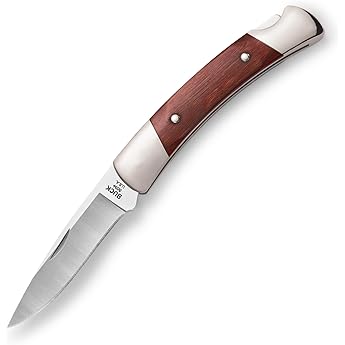
Buck Knives has manufactured folders in Post Falls, Idaho since 1902, making it one of the oldest continuously operating American knife makers. The iconic Buck 110 Folding Hunter, introduced in 1963, is still manufactured today using the same basic design that made it a standard choice for hunters, ranchers, and working professionals. The 110 uses a lockback mechanism (the lock rotates down to secure the blade fully open), a 420HC stainless steel blade that sharpens easily and holds a practical working edge, and a genuine leather handle that develops character with age.
The 110 costs $45-60 depending on the handle options (standard leather, premium leather, or stabilized wood) and represents one of the best long-term investments in a pocket knife. Buyers who purchase a 110 in their twenties often carry the same knife through their fifties or sixties. The blade can be resharpened indefinitely, replacement handles and springs are still available, and the design has proven itself in millions of real-world use cases. The lockback mechanism is arguably the simplest reliable locking system; it has no moving parts beyond the blade pivot and lock bar, which means fewer failure points and easier maintenance.
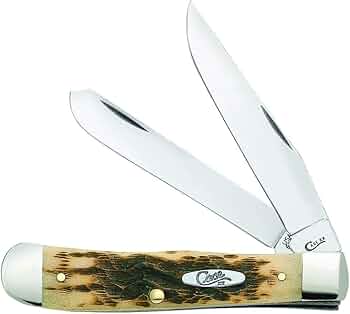
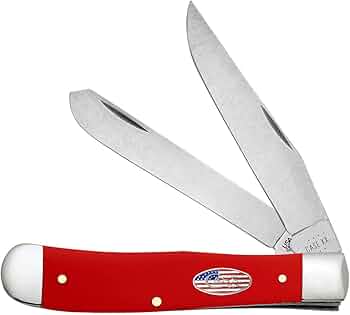
Case Knives manufactures traditional folder patterns in Bradford, Pennsylvania using manufacturing methods that date to the company's 1889 founding. The bone handles and traditional designs are intentionally conservative; Case does not emphasize assisted-opening or tactical aesthetics but rather steady, reliable working knives. The Case Trapper is the classic two-blade pattern — one 2.5-inch primary blade, one smaller utility blade — used by farmers and outdoor workers for a century. The steel is Case's proprietary chrome-molybdenum alloy, heat-treated to hold an edge without brittleness.
For buyers who value heritage and reliability over contemporary ergonomics, Case knives deliver. The designs appeal to people who use knives as actual tools rather than status symbols. A Case Trapper purchased today looks nearly identical to a Trapper from 1950. The manufacturing process uses traditional file-blade grinding and manual assembly techniques that larger manufacturers abandoned decades ago. For someone building a collection of American-made knives or wanting a dependable field knife without modern complexity, Case is the consistent choice.
Premium & Innovation: Benchmade and Spyderco
Benchmade manufactures premium folding knives at its Clackamas, Oregon facility, combining hand-finishing with precision CNC machining. The company does not publish exact production volumes, but Benchmade knives are hand-inspected before shipping and represent the premium tier of American folder manufacturing. The design philosophy emphasizes ergonomics: blade shape, handle contours, and lock access are all optimized for sustained cutting tasks and comfortable grip.
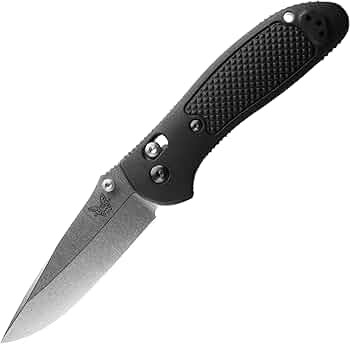
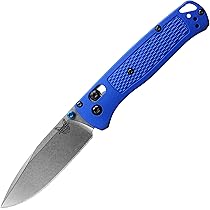
The Benchmade Griptilian ($120-150 depending on blade steel option) is the flagship design — a medium-sized folder with multiple blade and handle options, the Axis lock mechanism (a spring-loaded bar that engages the blade spine and rotates down to secure or release), and ambidextrous operation. The handle is G-10 composite material that resists wear and is comfortable in wet conditions. Benchmade offers the Griptilian in multiple blade steel grades: S30V stainless (premium corrosion resistance), M390 stainless (exceptional edge retention), and M4 steel (better edge geometry but requires more maintenance). The choice of steel grade allows buyers to optimize for their use case: S30V for coastal or wet environments, M390 for general cutting tasks where edge retention matters, M4 for situations where the absolute sharpness of the cutting edge is the priority.
Spyderco manufactures folders at its Golden, Colorado facility with a design philosophy centered on ergonomics and the Compression Lock mechanism — a lock that engages the spine of the blade but allows opening with thumb pressure on the spine rather than requiring manipulation of a separate lock bar. The distinctive spiderweb logo and round hole in the blade (for one-handed thumb opening) are immediately recognizable in the folding knife market.
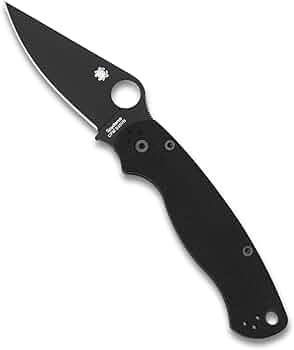
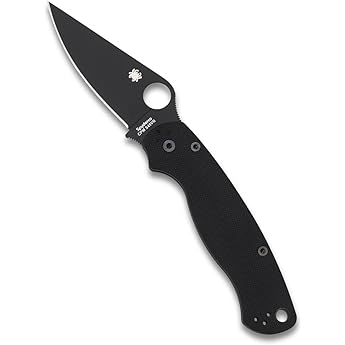
The Spyderco Paramilitary 2 is the company's flagship — a medium-to-large folder with extensive handle contouring for comfort, the Compression Lock, and availability in multiple blade steels (CPM S35VN, CPM M4, and CPM REX45). The ergonomic handle design makes the Paramilitary 2 notably more comfortable for sustained cutting tasks than knives with minimal contouring. For buyers who spend significant time using a knife for legitimate cutting work — food prep, fieldwork, or hunting — Spyderco's attention to ergonomic detail provides practical value. Spyderco offers both the Paramilitary 2 and smaller Delica model (100mm blade, $100-120) across a range of blade steel options, allowing customization for personal preference and use case.
Tactical & Specialist: KA-BAR and Zero Tolerance
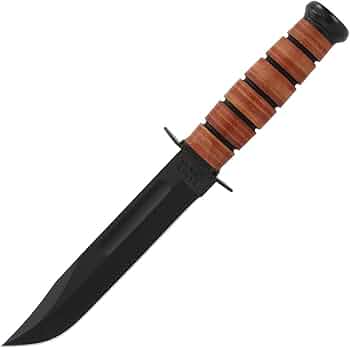
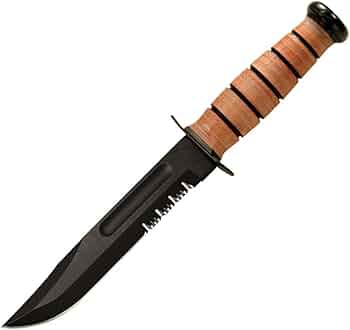
KA-BAR manufactures tactical and military-specification knives in Olean, New York, with a design heritage dating to the company's founding in 1923. The distinctive KA-BAR mark appears on military-issued knives used across decades of American military operations. KA-BAR's folder line includes both compact utility models and larger combat-ready designs optimized for specific tactical scenarios.
The KA-BAR 1480 TDI Law Enforcement folder is a compact blade (2 inches) designed for concealed carry and rapid deployment. The blade opens instantly with the flipper tang design, and the Tanto-style point — a flat edge leading to a sharp point — is purposefully aggressive. KA-BAR does not market these knives to civilians with tactical promises; the straightforward military heritage and specification focus appeal to law enforcement professionals and military personnel who trust KA-BAR's history of reliable performance in operational use.
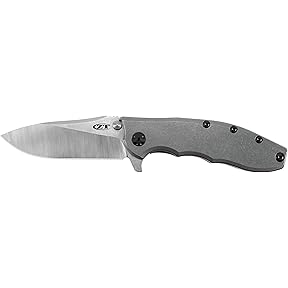
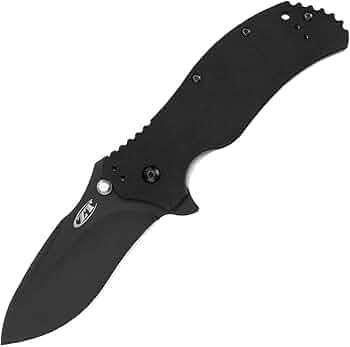
Zero Tolerance manufactures premium tactical folders at its Tualatin, Oregon facility, competing at the highest price tier of American-made folders ($200-300+). The design aesthetic emphasizes aggressive geometry: tanto blades with pronounced points, aggressive jimping (textured grip areas), and tactical styling. Zero Tolerance knives are manufactured to higher tolerances than most competitors; the quality of fit and finish is immediately noticeable when handling a Zero Tolerance folder next to knives at lower price points. The ZT 0561 Hinderer Design is an example of the upper tier — a 3.5-inch tanto blade in CPM S35VN stainless, hand-finished assembly, and a deployment mechanism (Assisted KVT) that combines speed with absolute reliability.
Zero Tolerance knives appeal to buyers who want the absolute highest level of American-made quality and are willing to pay for precision manufacturing at the extremes of tolerance and finish. These are knives that feel mechanically perfect; there is no play, no irregularity, and no cost-cutting visible anywhere in the design or assembly. For professional users (law enforcement, military), serious outdoor workers, and knife enthusiasts, Zero Tolerance represents the threshold where American manufacturing becomes essentially artisanal rather than industrial.
Understanding Blade Steel, Lock Types, and Knife Specifications
Blade steel quality is the most significant technical factor affecting knife performance. American knife manufacturers use stainless steel alloys that balance edge retention, corrosion resistance, and ease of sharpening. The most common grades in modern American knives are 14C28N (used by Kershaw), S30V and S35VN (Benchmade and Spyderco), and M390 or M4 (specialty steels).
Stainless steels like S30V offer excellent corrosion resistance — a knife made from S30V will not develop rust or patina even if exposed to salt water or left wet for extended periods. The trade-off is that S30V requires a harder edge angle and specialized sharpening techniques; S30V holds an edge longer than carbon steels but is more difficult to maintain. Carbon steels and tool steels like M4 sharpen more easily and take a sharper edge angle, but they develop surface rust if not regularly maintained. The choice between stainless and carbon is a use-case decision: a knife that will live in a fishing tackle box or be exposed to marine environments should be stainless; a knife that will be regularly maintained and sharpened can be carbon steel and will be sharper.
Lock mechanisms determine how securely the blade is held in the open position. The most common types are: lockback (a rotating bar behind the blade that must be manually disengaged to close), frame lock (a spring-loaded part of the handle that engages the blade spine), Axis lock (Benchmade's spring system that rotates to secure or release), and Compression Lock (Spyderco's variant that engages the spine with thumb pressure). All of these mechanisms are proven reliable across years of use. The lockback is the simplest and arguably most reliable for extreme durability; frame locks and modern variants (Axis, Compression) are more refined and often offer ambidextrous operation.
Blade shape affects cutting efficiency for different tasks. Drop-point blades (a gentle curve to the tip) are general-purpose and work for most cutting. Tanto blades (a flat edge leading to a sharp point) are optimized for penetration and are a tactical standard. Tanto blades sacrifice cutting ease for pointed strength; they are exceptional for materials that need a sharp tip but less efficient for general-purpose cutting. For most civilian EDC use, a drop-point or mid-ground blade shape is more practical than a tactical tanto.
Choosing Your First American-Made Pocket Knife
If you have never owned a quality pocket knife, start with a budget option: either a Kershaw SpeedSafe or a Buck 110. Both are priced under $60, both will demonstrate what a quality folder feels like, and both will serve you for years or decades. The Kershaw will appeal if you prefer modern ergonomics and assisted opening; the Buck 110 will appeal if you want simplicity, proven heritage, and the psychological satisfaction of carrying a knife that hunters have carried for sixty years.
Once you understand your preferences — blade size, lock mechanism, whether you want stainless or carbon steel — you can upgrade to a higher-quality American folder. If you prefer modern ergonomics and precision engineering, a Benchmade or Spyderco in the $120-150 range will deliver noticeable quality improvements over entry-level knives. If you prefer heritage and simplicity, a Case Trapper or additional Buck models will offer variations on proven designs.
The long-term economics of American-made knives are favorable: a Buck 110 purchased today for $50 will cost $0.50 per year over a century of use. A Benchmade Griptilian purchased for $140 will cost less than $3 per year over fifty years. Compare this to a budget imported knife purchased for $15 that fails in two years (implying a cost of $7.50 per year) and requires replacement. The higher upfront cost of American-made knives is offset by durability, warranty support, parts availability, and the simple fact that they still exist and function the same way decades after purchase.
Americans manufacturing pocket knives have survived and thrived because they deliver genuine value through reliability, repairability, and heritage. Whether you choose Kershaw for value, Buck or Case for heritage, Benchmade or Spyderco for contemporary engineering, or KA-BAR for tactical pedigree, you are choosing a tool built by companies that depend on producing knives that work. That's a meaningful difference when you're making a daily-carry decision.
Browse All Tools & Hardware Products
See all 605 verified American-made tools & hardware products in our catalog.
Frequently Asked Questions
Are Benchmade pocket knives worth the premium price?
Benchmade knives typically cost 2-3x more than budget options like Kershaw, but the quality differences are substantive: hand-finished assembly, tighter tolerances, more refined ergonomics, and premium blade steels. If you use your knife regularly and expect it to perform the same way for years, the premium is justified. If you want a knife for occasional utility, a Kershaw or Buck is more economical. Benchmade's Axis lock and ambidextrous design are legitimate engineering advantages for serious users.
Where are Buck Knives manufactured?
Buck Knives manufactures its folders in Post Falls, Idaho, where the company has operated since moving there in the 1950s. The iconic Buck 110 is manufactured at this facility using a design that dates to 1963. Buck has resisted offshore production despite price pressure from competitors, maintaining its Idaho facility as a point of brand identity.
What's the difference between a lockback and a frame lock?
A lockback mechanism uses a rotating bar behind the blade that manually disengages to allow closing — the simplest design and arguably the most durable for extreme use. A frame lock uses a spring-loaded portion of the handle itself to engage the blade spine, allowing one-handed closing and more compact overall design. Both are reliable; lockback is simpler and more proven over decades of use, while frame locks are more refined and offer ambidextrous operation.
Do I need a stainless steel blade or can I use carbon steel?
Stainless steel (S30V, S35VN) resists corrosion and is appropriate for wet environments or marine use. Carbon steel and tool steels (M4, M390) sharpen more easily and take sharper edges but develop patina if not regularly maintained. Choose stainless for a knife that will be neglected or exposed to moisture; choose carbon steel or high-speed steel if you're willing to maintain the knife regularly. Both are proven reliable in American pocket knives.
Will I actually use a pocket knife or is it just a novelty?
Statistically, people who buy quality pocket knives use them regularly. The average quality-knife owner uses their knife for opening packages, cutting tape, food prep, and countless other practical tasks. If you're someone who fixes or maintains things, works outdoors, or frequently needs a cutting tool, a pocket knife is genuinely useful. If your life involves no tasks requiring a blade, it will remain novelty. But most people discover that carrying a quality knife expands how they think about solving small problems.