Best American-Made Workout & Fitness Equipment — Barbells, Rucking Gear & Kettlebells
Professional-grade strength training equipment forged and assembled in Ohio — from CrossFit competition rigs to home gym barbells built to last decades.
Quick Answer
The best American-made fitness equipment includes Rogue Fitness barbells and racks from Columbus, Ohio, the industry standard for CrossFit boxes and home gyms worldwide.
Last updated: April 2026
Made in USA Sports & Outdoors: by the numbers
- 622 verified American-made sports & outdoors products from 140 U.S. brands in our catalog, each checked against factory locations and manufacturer statements.
- Top manufacturing states for these brands: California (10 brands), Colorado (9 brands), Minnesota (9 brands).
- U.S. manufacturing employed 12.6 million Americans as of May 2026 (U.S. Bureau of Labor Statistics), and 70% of consumers say buying American-made matters to them (DuraPlas survey, Feb 2025).
Catalog figures recompute at every site build. More data and sources on our American manufacturing statistics page.
Quick Comparison
| Product | Brand | Link |
|---|---|---|
| Rogue Fitness Wrist Wraps Short 12-Inch Black | Rogue Fitness | Shop Now |
| Rogue Fitness Wrist Wraps 18-Inch | Rogue Fitness | Shop Now |
| Rogue Fitness Wrist Wraps Short 12-Inch Black | Rogue Fitness | Shop Now |
| Rogue Fitness Wrist Wraps 18-Inch | Rogue Fitness | Shop Now |
| Rogue Fitness Wrist Wraps Short 12-Inch Black | Rogue Fitness | Shop Now |
| Rogue Fitness Wrist Wraps 18-Inch | Rogue Fitness | Shop Now |
| Rogue Fitness Wrist Wraps Short 12-Inch Black | Rogue Fitness | Shop Now |
| Rogue Fitness Wrist Wraps 18-Inch | Rogue Fitness | Shop Now |
| Rogue Fitness Wrist Wraps Short 12-Inch Black | Rogue Fitness | Shop Now |
| Rogue Fitness Wrist Wraps 18-Inch | Rogue Fitness | Shop Now |
Rogue Fitness: American Strength Training Equipment Made in Columbus, Ohio
Rogue Fitness manufactures the broadest line of American-made strength training equipment available to the consumer market, with everything from barbells and dumbbells to power racks and specialized training implements fabricated at their Columbus, Ohio facility. The company was founded in 2006 by Bill Henniger, who discovered that sourcing quality American-made gym equipment was nearly impossible despite the rapid growth of functional fitness and CrossFit training. Henniger's manufacturing background led him to fabricate his own equipment, and the quality caught the attention of gym owners and athletes who were hungry for American-made alternatives to imported equipment.
Rogue's manufacturing philosophy is straightforward: accept slightly higher production costs in exchange for tolerances, surface finishes, and durability standards that allow equipment to perform reliably under professional competition conditions. The company's decision to sponsor and eventually supply equipment for the CrossFit Games — the sport's most visible competition — has meant that Rogue barbells and rigs are tested publicly and repeatedly at the highest level of functional fitness. That competitive context gives Rogue's engineering credibility that generic equipment manufacturers simply cannot match.
The Columbus facility handles the complete manufacturing pipeline: steel is cut and formed in-house, welding and machining operations maintain tight tolerances, power coating applies consistent finishes, and final assembly and quality inspection happen before products ship. This vertical integration means Rogue controls every variable in the manufacturing process — material sourcing, heat treatment specifications, finish quality, and final inspection — which is why Rogue equipment is specified for commercial gyms, university athletic programs, and military training facilities that cannot tolerate equipment failures.
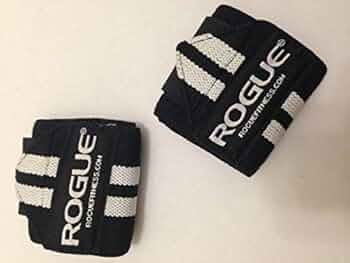
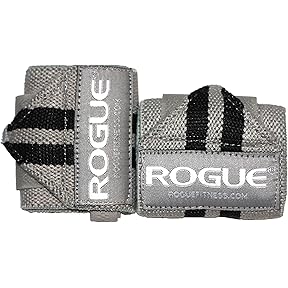
Rogue Barbells: The Ohio Bar and Specialty Strength Sports Designs
The Ohio Bar is Rogue's flagship barbell and remains the most versatile choice for home gym builds, CrossFit facilities, and functional fitness programming. The 28.5mm shaft diameter and knurl pattern are designed to work equally well for the Olympic lifts (snatch and clean & jerk), powerlifting (squat, bench, deadlift), and CrossFit's mixed-modal training. The barbell spins freely in the sleeves without excessive play, the knurl is aggressive enough for callus-inducing grip without shredding hands, and the steel is American-sourced and heat-treated to withstand the repeated stress of loaded training year after year.
For athletes specializing in Olympic weightlifting, Rogue's Attitude Powerlift Bar uses a 20kg specification (lighter than the 28.5mm general-purpose bars) with more aggressive knurl and a whip in the shaft that assists with explosive movements. For powerlifters, the Rogue Boneyard Bars offer competition-spec designs optimized for the squat, bench, and deadlift with adjustments to knurl pattern and shaft flex tuned to each lift. For home gym users who want a single multipurpose barbell, the Ohio Bar's versatility is the better choice; the investment is $100-150 for a quality American-made barbell built to last three decades of use.
A complete home gym barbell setup typically includes one general-purpose bar like the Ohio, weight plates (Rogue makes competition-standard plates), and collars. The total investment for a functional single-barbell setup is in the $300-500 range — substantial but cheaper per-use over twenty years than the implied cost of gym memberships or lower-quality equipment that requires replacement.
Rogue Dumbbells, Kettlebells, and Specialty Equipment
Rogue's dumbbell line ranges from 5-pound adjustable dumbbells for functional fitness use through 150-pound fixed pairs for serious strength training. The Rogue Hex Dumbbells are the standard choice for most applications — they don't roll, they stack efficiently, and the surface finish resists corrosion in home gym environments. The Rogue Monster Dumbbells are heavier and more durable for commercial gym use where dumbbells are abused by hundreds of users monthly. For home use, the Hex Dumbbells are adequate and more economical.
Rogue kettlebells are cast from American-sourced steel and finished with a powder coat that resists rust. The handle thickness is optimized for kettlebell-specific movements — swings, Turkish get-ups, and goblet squats — which differ from dumbbell usage in how the implement is grasped. Kettlebell programming has become a standard component of functional fitness and CrossFit training, making quality kettlebells essential for most contemporary gym setups. Rogue kettlebells start at 25 pounds and range through 200+ pounds for elite-level athletes.
Beyond barbells, dumbbells, and kettlebells, Rogue manufactures pull-up bars, power racks, bench designs, wall-mounted rigs, and specialized implements like farmer's carries handles and trap bar deadlift bars. The pull-up bar selection ranges from ceiling-mounted options for commercial installations to door-frame models for home use. For home gym builders, Rogue's Wall-Mounted Rig offers a compact strength training station that includes pull-up capability, pin-and-hole safety racks, and attachment points for accessories — all built from American steel at the Columbus facility.
Rogue Power Racks and Gym Infrastructure
Power racks are the centerpiece of any serious strength training facility. Rogue's Monster Lite Rig and Monster Rig product lines dominate the commercial and home gym market because they solve the core problem: safely supporting barbell exercises like squats and bench presses across a wide range of user experience levels. A power rack's safety features — the spotter arms that catch the barbell if the lifter fails — make solo training possible without requiring a dedicated training partner or a more expensive equipment setup.
Rogue's Squat Stand is the minimalist alternative for home users who prioritize space efficiency over full-featured rack capability. The stand provides bar height and safety pins for squats and bench pressing without the footprint of a full power rack. For apartment dwellers or users with limited space, the Squat Stand is a practical American-made option that costs $300-500 — less than half the price of a full rack while still providing the essential safety and functionality.
The decision between a full power rack and a minimalist stand is driven by available space, primary lift selection, and budget. For someone building a serious home gym intending to barbell squat regularly, a full rack justifies the space and investment. For a user primarily interested in bench pressing or deadlifting with barbell support for warmups, the Squat Stand is sufficient and more space-efficient. Rogue's manufacturing capacity allows customization and configuration options — customers can build racks with specific attachment points, finish preferences, and accessory configurations. This level of customization is practical only because everything is manufactured domestically where Rogue can support low-volume custom orders without moving production to a contract manufacturer.
Building a Home Gym on an American-Made Foundation
A functional home gym requires four basic components: a barbell, plates, a bench or rack, and enough space to move safely. Rogue makes all four at their Columbus facility. A minimalist setup — Ohio Bar, weight plates totaling 185-215 pounds, and a bench — costs $400-600 and covers the majority of barbell programming: squats, bench presses, deadlifts, and rows. Adding a power rack instead of just a bench adds another $300-500 but provides safety features that make solo training more practical.
The decision to build an American-made home gym is partly practical (Rogue equipment is accessible and high quality) and partly ideological (supporting domestic manufacturing). Rogue's pricing is notably higher than generic imported equipment — a Rogue Ohio Bar costs $150-180 where generic Chinese barbells sell for $60-80. That pricing difference reflects Rogue's commitment to Columbus manufacturing, which means accepting lower per-unit margins in exchange for control over manufacturing quality and the market positioning of being America's gym equipment manufacturer.
For budget-conscious buyers, the cost difference can seem prohibitive. But the long-term economics favor American-made equipment: a Rogue barbell will perform identically in twenty years as it does today; a cheap imported barbell will degrade, corrode, and eventually require replacement. A person who buys an Ohio Bar today, maintains it with basic care (occasional wipe-down to prevent rust accumulation), and uses it for strength training across multiple decades is optimizing for total cost of ownership, not initial purchase price. Rogue's customer service and warranty support also back up their products — if something breaks or fails, Rogue's Columbus facility can repair or replace it. That's a practical difference when you're making a long-term equipment investment.
GORUCK: American-Made Rucking Gear and Military Training Equipment
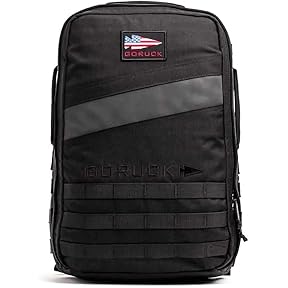
GORUCK manufactures tactical rucking packs and training gear at its headquarters in Jacksonville Beach, Florida, with a design philosophy rooted in military movement and practical toughness. The company was founded by Jason McCarthy, a former Special Forces officer who created GORUCK GR1 pack after being frustrated by the lack of rugged, durable rucking equipment designed for serious functional fitness training. The GR1 became the standard ruck for the GORUCK Challenge — an elite fitness event that combines movement under load with navigation and team problem-solving in the style of military selection courses.
Rucking as a fitness discipline involves carrying weighted packs (typically 20-45 pounds) over 3-8 mile distances, developing explosive power, core strength, and cardiovascular endurance in a way that differs from traditional barbell training. GORUCK gear is engineered specifically for this discipline: packs are built from 1000D CORDURA nylon that resists abrasion and puncture, internal structures support proper load distribution across the shoulders and hips, and YKK AquaGuard zippers prevent moisture ingress even after extended exposure to rain or water crossings. The GR1 and GR2 pack sizes (26L and 40L capacity) are designed to balance pack stability with weight, allowing athletes to load substantial weight without excessive swinging or shifting during movement.
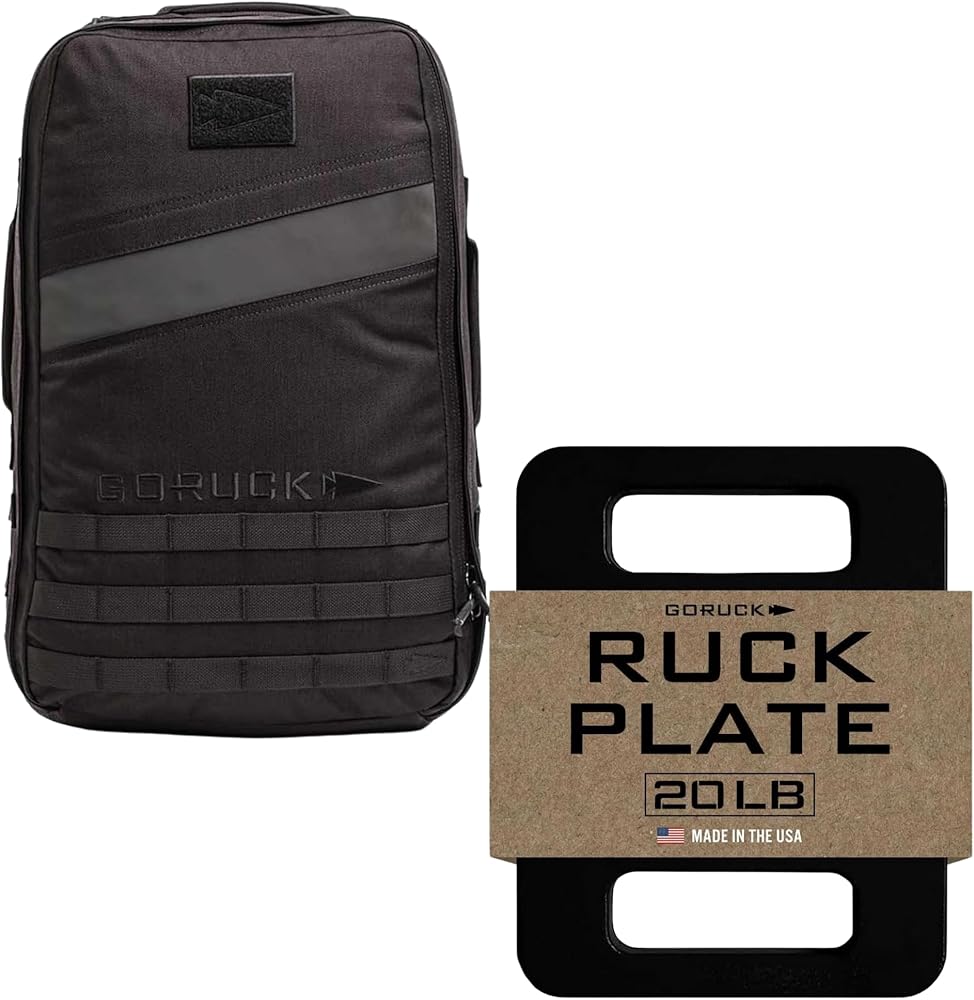
Beyond rucking packs, GORUCK manufactures training sandbags (40, 60, and 80-pound variants) and accessory gear like plates, medicine balls, and webbing that integrate with their pack system. The sandbags are designed specifically for how the body handles loading — the weight distribution and density are optimized for uncomfortable, realistic training conditions that pure barbell lifting doesn't replicate. GORUCK also manufactures tactical apparel and recovery tools that extend their ecosystem from equipment into a complete training philosophy. The company's SCARS Lifetime Guarantee backs every GORUCK product: if gear fails for any reason, GORUCK will repair or replace it indefinitely.
Browse All Sports & Outdoors Products
See all 622 verified American-made sports & outdoors products in our catalog.
Frequently Asked Questions
Are Rogue Fitness barbells really made in the USA?
Yes. Rogue manufactures its barbells and all primary equipment at its Columbus, Ohio facility. The steel is American-sourced, and the complete manufacturing process — cutting, forming, heat treating, machining, finish coating, and assembly — takes place in Ohio. Rogue has explicitly rejected outsourcing this production to lower-cost countries, citing the quality control advantages of domestic manufacturing.
How much does a complete home gym cost?
A functional home gym requires a barbell, plates ($150-300 depending on weight), and a bench or rack. A minimalist setup with just a barbell, plates, and bench costs $400-600. Adding a power rack for safety upgrades the total to $700-1,100. For comparison, a year of gym membership can cost $500-1,200 depending on the facility, making a home gym investment reasonable over a 2-3 year horizon.
What's the difference between the Ohio Bar and specialty Rogue barbells?
The Ohio Bar is the versatile choice for general-purpose strength training, CrossFit, and functional fitness. Specialty barbells are optimized for specific sports: Olympic bars for weightlifting have a thinner shaft and more whip for explosive movements, while powerlifting bars are stiffer with more aggressive knurl for heavy singles. For home use and mixed-modal training, the Ohio Bar covers the majority of programming.
Do Rogue kettlebells work the same as dumbbells?
No. Kettlebells have a different center of gravity and handle geometry optimized for specific movements: swings, Turkish get-ups, and goblet squats. The handle thickness on kettlebells is designed for these distinctive gripping patterns. Dumbbells are better for pressing movements. A complete functional fitness gym has both.
Will a Rogue barbell rust in a home gym?
Rogue's finish options include black oxide, stainless steel, and Cerakote ceramic coating. Black oxide is the standard and is corrosion-resistant but will develop surface rust if exposed to moisture or humidity without care. In a dry indoor environment, black oxide requires only occasional wiping. Stainless and Cerakote options resist rust more aggressively but cost more. For a climate-controlled basement or garage, black oxide is sufficient.
Can I use a Rogue barbell for CrossFit or Olympic weightlifting?
The Ohio Bar is versatile and works for both CrossFit and Olympic movements. For serious Olympic weightlifting competition, Rogue's specialty Olympic bars with thinner shafts and more whip are optimized for the snatch and clean & jerk. For CrossFit competitions and general strength training, the Ohio Bar is the standard choice.
What is rucking and why is GORUCK training gear designed for it?
Rucking is walking or running while carrying weight in a backpack — a functional fitness discipline that builds strength, endurance, and explosive power without the joint stress of barbell loading. GORUCK packs are designed specifically for rucking: the 1000D CORDURA fabric resists abrasion during extended movement, the internal structure ensures proper load distribution across your shoulders and hips, and the capacity is optimized to allow athletes to carry 20-50 pound loads over 3-8 mile distances. The GR1 (26L) is ideal for shorter events; the GR2 (40L) is better for extended rucking and team challenges.
Is GORUCK gear really made in the USA?
Yes. GORUCK manufactures all GR1, GR2, sandbags, and most tactical gear at its Jacksonville Beach, Florida headquarters. The packs are hand-built with 1000D CORDURA nylon, YKK AquaGuard zippers, and internal components sourced domestically. GORUCK is backed by a SCARS Lifetime Guarantee — the company will repair or replace any product at no charge, indefinitely, which is only possible when manufacturing and customer service are under direct control.