Best American-Made Everyday Carry (EDC) Gear
Folding knives, multi-tools, pens, and flashlights made in the USA — the gear people reach for every day because it works without thinking about it.
Quick Answer
The best American-made EDC gear includes Benchmade folding knives from Oregon City, Oregon (AXIS lock, LifeSharp service), Leatherman multi-tools from Portland, Oregon (since 1983), and Zippo lighters from Bradford, Pennsylvania (since 1933).
Last updated: April 2026
Made in USA Tools & Hardware: by the numbers
- 605 verified American-made tools & hardware products from 98 U.S. brands in our catalog, each checked against factory locations and manufacturer statements.
- Top manufacturing states for these brands: Pennsylvania (11 brands), Illinois (7 brands), Ohio (6 brands).
- U.S. manufacturing employed 12.6 million Americans as of May 2026 (U.S. Bureau of Labor Statistics), and 70% of consumers say buying American-made matters to them (DuraPlas survey, Feb 2025).
Catalog figures recompute at every site build. More data and sources on our American manufacturing statistics page.
Quick Comparison
Folding Knives: Kershaw, Benchmade, Zero Tolerance, Buck, and Case
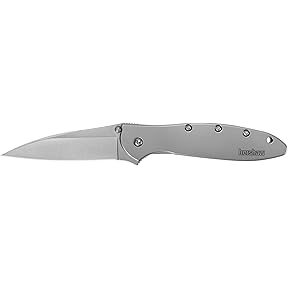
The everyday carry knife market has a well-established American tier that ranges from Kershaw's accessible price points through Benchmade's precision-machined premium models. Kershaw Knives has made folding knives in Tualatin, Oregon since 1974. Their SpeedSafe assisted-opening mechanism — a torsion bar that snaps the blade fully open once the user initiates deployment with a thumb stud or flipper tab — is one of the most widely copied knife mechanisms in the category. The Blur (3.4-inch blade, aluminum handle, under 4 ounces) and the Leek (3-inch blade, slim aluminum handle, under 3 ounces) are the most practical domestic production choices for daily carry. The Leek disappears in a front pocket; the Blur handles slightly heavier cutting tasks.
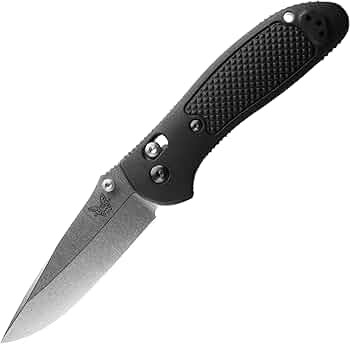
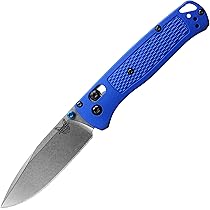
Benchmade makes precision folding knives in Oregon City, Oregon where tolerances are tight enough that blade play is essentially nonexistent out of the box. Their AXIS lock mechanism — a crossbar that engages the blade tang from both sides — is one of the most secure and smoothest-operating lock designs available at any price point. The AXIS lock is also ambidextrous, which matters for left-handed users who find most assisted-opening knives awkward. Benchmade's LifeSharp service provides free professional sharpening by mail, indefinitely. For EDC use, the Mini Griptilian (2.91-inch blade, 2.56 ounces) is the most popular model — small enough for pocket carry without sacrificing a useful blade length.
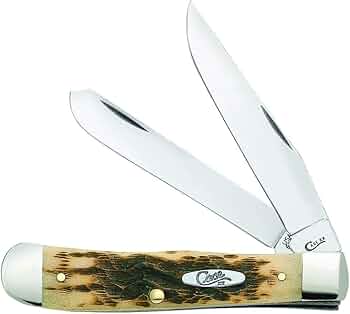
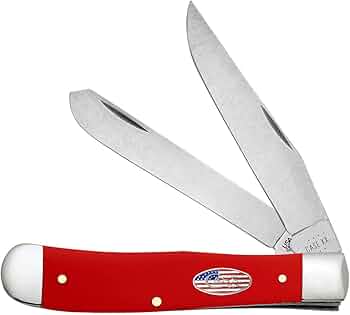
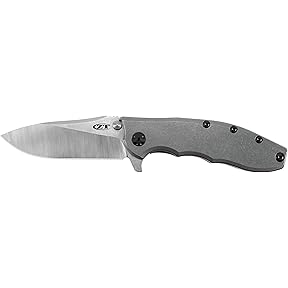
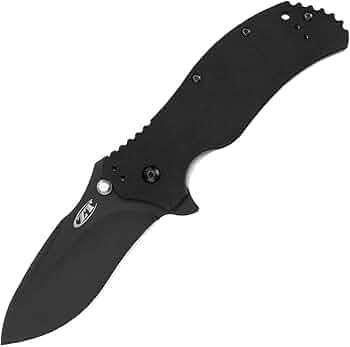
Zero Tolerance, also made in Tualatin under the Kai USA parent company as Kershaw, builds premium tactical folders with titanium framelock construction and high-end steel like CPM-20CV. For buyers who want an American-made knife that competes with custom knifemakers at a fraction of the cost, ZT's 0640 and 0562 models are the benchmark. Buck Knives in Post Falls, Idaho makes the iconic Model 110 folding hunter — a slip-joint with a lockback that has been in continuous production since 1964 and remains the reference American folding knife for traditional carry. Case Knives in Bradford, Pennsylvania produces traditional slip-joint patterns for buyers who want a non-locking folder with a documented American heritage dating to 1889.
Multi-Tools and Fixed Blades: Leatherman and KA-BAR
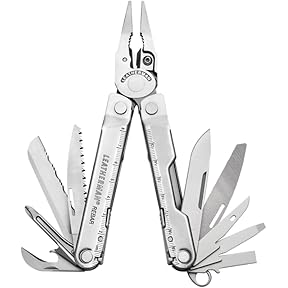
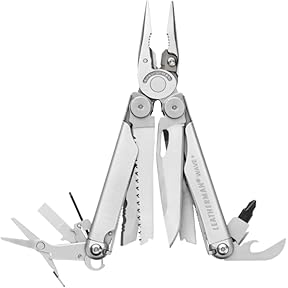
Leatherman has assembled multi-tools in Portland, Oregon since 1983, when REI placed the initial order that launched the brand. The Wave+ is the most popular general-use multi-tool: all implements open with one hand, the blades and most tools lock open, and the overall weight (8.5 ounces with sheath) is manageable for daily carry. For buyers who want a smaller package, the Rebar delivers essential tools — needlenose pliers, wire cutters, knife, file, saw, and screwdrivers — in a lighter, more compact frame. The Skeletool is the minimalist option: pliers, knife, and a combination screwdriver/bottle opener, nothing more. Each serves a different carry philosophy, and all are made in Portland from American-sourced stainless steel.
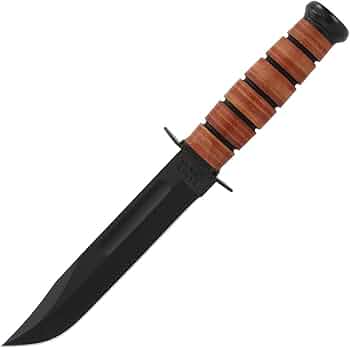
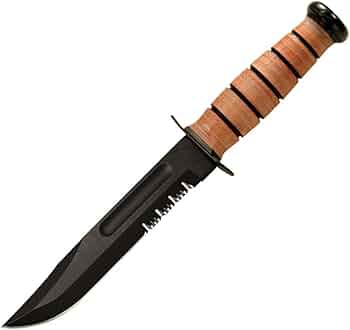
For buyers who want a fixed blade rather than a folding knife as part of their EDC, KA-BAR's fixed-blade lineup is made at the Cutco facility in Olean, New York. The classic USMC Fighting/Utility Knife — adopted by the Marine Corps in 1942 — is the most recognized model, but the Becker series designed by Ethan Becker offers more practical blade geometries for outdoor and utility tasks. A KA-BAR fixed blade as a camp or work knife paired with a Kershaw or Benchmade folder for everyday carry is a practical two-knife system that covers the full range of cutting tasks.
For buyers who are new to multi-tools: the two most common mistakes are buying too large a tool (the Surge is great but obtrusive for daily carry) and buying a tool without locking blades (non-locking blades are genuinely dangerous under load). The Wave+ avoids both mistakes at a weight that most people find acceptable in a belt sheath or a jacket pocket.
Pens and Notebooks: Fisher Space Pen and Rite in the Rain
Fisher Space Pen has made pressurized ballpoint pens in Boulder City, Nevada since 1966. The pressurized nitrogen cartridge forces thixotropic ink to the tungsten carbide tip regardless of orientation — upside down, sideways, in zero gravity, at -30°F, and at 250°F. The Bullet Pen (Model 400) is the classic EDC form factor: about 3.75 inches capped, 5.25 inches extended, weighing under an ounce. It fits in a shirt pocket, pairs with a keychain, or lives in a jacket pocket for years without maintenance. The cartridges write for approximately 15,000 feet of line and are replaceable; many pen bodies from other manufacturers accept Fisher cartridges as an upgrade.
For buyers choosing between the Bullet and the Trekker or Backpacker models: the Bullet is the most compact and the most recognized form factor. The Trekker adds a carabiner clip for attachment to a pack or keyring. The Backpacker uses a removable cap as a cap-actuated extender — it's the most pocket-friendly when capped because the body is only 3.75 inches total. All use the same PR4 cartridge and write identically.
Rite in the Rain weatherproof notebooks from Tacoma, Washington complete the EDC writing kit. The paper uses a proprietary treatment that repels water — field notes written in rain, near water, or in humidity remain readable. Pencil and Rite in the Rain's All-Weather pens write reliably on the treated surface; standard gel inks bead. The No. 135 pocket notebook (3.5 by 5 inches, top-bound, 48 pages) is the most useful EDC size — it fits in a back pocket and weighs almost nothing. For serious field use, the larger hardbound field books provide more pages in a durable cover.
Flashlights: Streamlight and SureFire
Streamlight has made professional flashlights in Eagleville, Pennsylvania since 1973. For EDC use, the Stylus Pro is the most practical choice: a pocket-sized LED penlight at 65 lumens, 5.3 inches long, weighing 1.1 ounces with batteries. It fits in a shirt pocket or clips to the edge of a bag and provides enough light for reading, finding dropped items in a dark vehicle, and close-range inspection work. The single AAA battery format means a replacement battery is available everywhere.
For buyers who want more output, the Streamlight Protac 1L-1AA uses a single CR123A or AA battery and produces 350 lumens at maximum — enough for outdoor use and self-defense applications. The two-cell options (Stinger DS LED rechargeable, PolyTac series) are appropriate for law enforcement, security, and professional carry where sustained high output is a job requirement. Streamlight's rechargeable duty lights use hot-swap charging cradles that allow continuous deployment without downtime.
SureFire, made in Fountain Valley, California, occupies the premium tier of the EDC flashlight market. The G2X Pro produces 600 lumens maximum with a runtime of 1.5 hours, or 15 lumens for 37 hours on the low setting. SureFire's manufacturing standards — every unit tested before shipping, machined aluminum bodies, sealed switches — are genuinely tighter than consumer-grade lights. For buyers who want a light that works under adverse conditions without question, SureFire's track record in professional use justifies the premium. For general EDC where reliability matters but professional-grade testing isn't required, Streamlight delivers equivalent performance at a meaningfully lower price.
Browse All Tools & Hardware Products
See all 605 verified American-made tools & hardware products in our catalog.
Frequently Asked Questions
What is the best American-made folding knife for everyday carry?
The Kershaw Blur and Benchmade Mini Griptilian are the two most practical choices for most people. The Blur (made in Tualatin, Oregon) is a better value with SpeedSafe assisted opening; the Mini Griptilian (Oregon City, Oregon) has tighter tolerances, better steel options, and the AXIS lock. Budget matters: Kershaw's domestic models run $80-130, Benchmade runs $150-200. For a traditional non-locking knife, the Buck 110 from Post Falls, Idaho has a 60-year production record.
Which Leatherman model is best for everyday carry?
The Wave+ is the most practical all-around choice: it opens all implements one-handed, has locking blades, and is compact enough for daily carry in a belt sheath or cargo pocket. If you want something smaller, the Skeletool reduces the tool count to essentials and saves weight. The Rebar is a middle ground — more tools than the Skeletool, slightly more compact than the Wave+. All are assembled in Portland, Oregon.
Does Fisher Space Pen actually work upside down?
Yes. Fisher Space Pens use a pressurized nitrogen cartridge that forces ink to the tip regardless of orientation. They write reliably upside down, at any angle, in cold temperatures down to -30°F, and even underwater. The pressurized system also prevents the ink from drying at the tip — a problem that plagues conventional ballpoints left unused for extended periods.
What makes an EDC flashlight different from a regular flashlight?
EDC flashlights are optimized for size, weight, and one-handed operation. Features that matter for daily carry: a low-mode runtime long enough for camp or emergency use, a clip for pocket or bag attachment, and a battery format available everywhere (AA or AAA). Streamlight's Stylus Pro (single AAA, 65 lumens) and SureFire's G2X (CR123A, 600 lumens max) represent the practical range of EDC light options from American manufacturers.